
Relationship-Focused Individual Therapy in Los Angeles
Stuck in the Same Relationship Pattern?
Are you struggling to obtain a romantic partner, despite your eagerness to do so? Do you feel stuck in an unhealthy pattern with “toxic” friends or partners? Or are you noticing similar issues across different relationships, from family to coworkers, on your end or theirs?
If any of these resonate, relationship-focused therapy in Los Angeles can help. Therapy for relationship issues is about gaining insight into your needs and learning the relational skills it takes to thrive in healthy, happy, mutually supportive relationships.
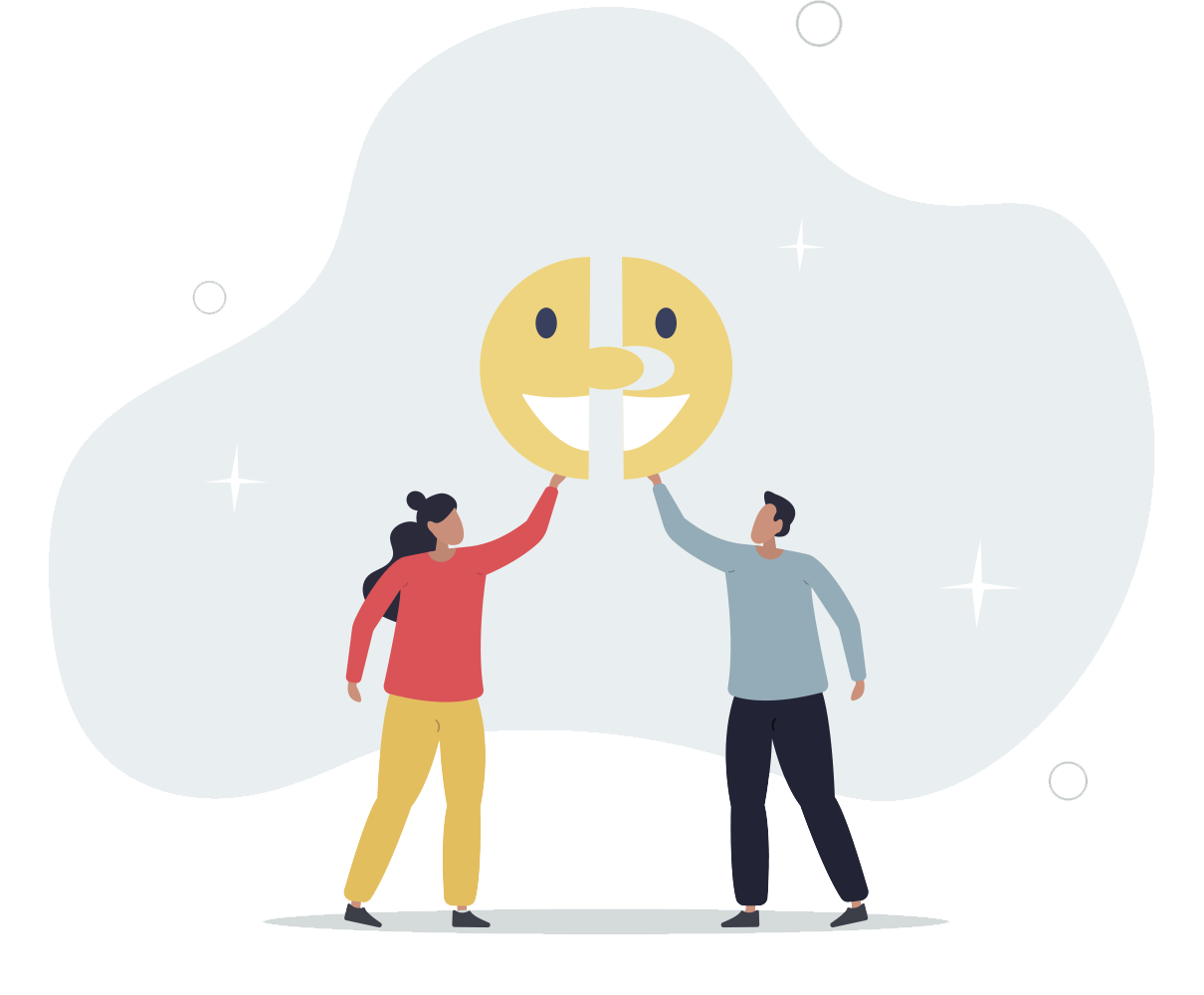
“Boundaries are the distance at which I can love you and me simultaneously.”
– Prentis Hemphill

Our Lives Consist of Many Different Relationships
No Relationship Is Perfect
No relationship, be it between friends, family, colleagues, or romantic partners, is perfect. Once a relationship begins to have notable issues, however, the stress radiates to all aspects of our lives. Our other relationships begin to suffer. Our work feels more stressful, our view of ourself can deteriorate, and life as a whole can feel less fulfilling.
As a therapist specializing in relationship issues in Los Angeles, I will work together with you to identify the roots of the issues you are currently experiencing and help you develop the skills to identify and express your needs, set and maintain healthy boundaries, and practice effective conflict resolution rather than unhelpful avoidance or anxiety-inducing arguments.
Sometimes the most powerful work happens individually, before you ever bring a partner into the room, because it allows you to understand your own patterns with honesty and clarity.
Is This Familiar?
Signs It May Be Time to Reach Out
Therapy focused on relationship issues is not only for people in crisis, and it is not only for people who are partnered. While we often become aware of issues while within a relationship, some of the most useful work happens between relationships, when we’re reflecting and there is enough distance to see the pattern clearly.
If several of these are familiar, that is usually a sign the pattern is structural rather than situational, and structural patterns respond well to therapy.
This Often Sounds Like
- › The same argument keeps returning in different clothes
- › You become a different version of yourself around certain people
- › You apologize for things that were never yours to apologize for
- › You know what you need but cannot advocate for your needs
- › The pattern has followed you across several relationships
- › You struggle to set boundaries
- › Relationships that should feel easy leave you exhausted
Gender, Sexuality, and Relationships
Therapy Is a Place to Talk Freely
Issues regarding one’s gender or sexuality can be difficult to discuss with many people in our lives, let alone to receive informed and personalized advice about. That’s especially true if your relational concern is something that others have treated as taboo or nontraditional, such as curiosity about opening a relationship, recovering from post-affair trauma, or starting a relationship with someone different to your usual “type.” That’s where therapy comes in.
There are a fraction of narratives about queer couples, and even less featuring a trans person. Depending on when, where, and how you were raised, you may not have had any narratives about what healthy, loving relationships can look like for people with your gender or sexual identity. That is why it is so important to have a qualified psychologist with extensive experience working with people like you. If this applies to you, you can read more about my LGBTQ+ affirming work here.
Challenges I Work With
- › Difficulty finding or maintaining a partnership
- › Repeated toxic relationship patterns
- › Family conflict and shifting roles
- › Healing after a breakup or a betrayal, including an affair
- › Dating in the modern world, apps and all
- › LGBTQIA+ and ethically non-monogamous (ENM) relationships
Personalized, Evidence-Based
What Therapy For Relationship Issues Can Address
In our sessions, we will explore the underlying dynamics that shape how you show up in your relationships and how others treat you. This might include examining how your earliest attachment experiences influence your expectations today, or it might involve very practical work around communication skills, boundary-setting, and learning to express your needs without guilt or anxiety.
I also have extensive experience supporting clients in ethically non-monogamous relationships and LGBTQ+ partnerships, where the relational landscape comes with its own unique considerations.
Often, relationship pain turns out to be anxiety wearing a different outfit. Anticipating rejection, reading tone into a delayed message, over-apologizing, agreeing to things you resent later and, of course, avoiding conflict. Because anxiety is another of my core specialties, we do not have to treat those as two separate problems.
There Is No One Size Fits All
My Approach to Therapy for
Relationship Issues
If Structure Helps You
CBT, DBT, and ACT
Cognitive Behavioral Therapy helps you identify and reframe the distorted thinking patterns underneath a difficult feeling. Dialectical Behavior Therapy adds practical tools for riding out intense emotion without acting on it. Acceptance and Commitment Therapy teaches you to make room for hard feelings while still moving toward the things that matter to you. Some clients respond quickly to structured techniques like these.
If You Want to Go Deeper
Psychodynamic, Relational, and Attachment-Based
Other clients benefit more from exploring where a pattern began. Psychodynamic and attachment-based work looks at how your earliest relationships shaped what you expect from people now, and relational therapy uses what happens between us in the room as live material. Many clients find a blend of both is exactly what they need, and we will collaborate on that as we go.
Getting Started
What to Expect in Your First Sessions
Starting therapy for the first time, or starting with a new therapist, can be a daunting process. I have been there. Making people feel comfortable and cared for while they open up about difficult and deeply personal topics is my specialty.
We begin with a complimentary 15-minute consultation. This is a chance for you to describe what you are hoping to get out of therapy, for me to make sure your needs are a good fit with my specialties, and for you to ask any questions about the process. There is no pressure and no obligation.
Once we begin our work together, we will identify your symptoms, your treatment goals, your values, and your strengths. We will trace the pattern back through the relationships where it has shown up before, which is usually where its logic becomes visible. From there, we build the personalized coping skills that make up the bulk of our work.
Two Paths Forward
Individual Therapy or Couples Therapy
Working On Your Own
Individual Therapy
Individual work allows you to understand your own patterns before bringing a partner into the room. You do not need your partner’s participation, or even their agreement, to change how you show up. If you feel your issues within your current relationship are a pattern across other relationships, then individual therapy is likely the right fir for you.
Working Together
Couples Therapy
Couples therapy can be a great asset if you would like to bring a partner into sessions. If you are currently partnered and feel that the issues within your current relationship should be the focus of therapy, then couple’s therapy is likely the right choice for you. We can discuss which format fits your situation during a free consultation.
Credentials That Matter
Why Work with Dr. Shannon Thomas for Relationship Therapy?
I am a licensed psychologist (Psy.D., PSY35186) in California with deep expertise in relationship patterns, communication, and boundary-setting. In addition to more CBT-oriented modalities, my training spans psychodynamic, relational, and attachment-based approaches, which matter enormously for this work because they deal directly with how early bonds shape adult connection. I also have extensive experience with LGBTQ+ relationships and ethically non-monogamous partnerships.
Alongside my practice I teach graduate psychology courses and training workshops, and I serve as President of the San Gabriel Valley Psychological Association. Staying close to the teaching side of this field and remaining highly engaged with fellow mental health professionals in my community is how I keep my clinical work current.
All sessions are conducted via telehealth on a HIPAA-compliant platform, so you can attend from anywhere in California, including my most prominent areas of Los Angeles and Pasadena. I typically begin seeing new clients within one week of our consultation.
My fee is $290 per individual session and $345 for couples therapy. I provide superbills for out-of-network insurance reimbursement.


Common Questions
Frequently Asked Questions
Is this individual therapy or couples therapy?
This page focuses on individual therapy for relationship issues. I also offer couples therapy.
Can you help with dating anxiety?
Absolutely! Navigating dating apps, managing rejection, and bringing vulnerability to new connections is genuinely hard. It is something I work on regularly with clients of all backgrounds and identities.
Do you work with LGBTQIA+ clients on relationship issues?
Yes, and this is one of my core specialties. I have extensive experience with queer and trans relationships and deeply understand the unique dynamics involved. I also work with clients in ethically non-monogamous partnerships, as well as those aiming to recover from post-affair trauma after infidelity.
Is relationship therapy available via telehealth?
Yes. All sessions are conducted via HIPAA-compliant telehealth, making relationship therapy accessible from anywhere in California. Ideally, you two will be together for most sessions, though I frequently work with couples who sometimes need to join seperately if one partner is at work, etc.
What if I am not currently in a relationship?
That is a common and often ideal time to do this work. Much of relationship therapy concerns dating, friendship, family dynamics, and workplace relationships, and understanding your patterns before the next relationship rather than during it. That way, your next relationship can benefit from your therapeutic insights rather than marking the beginning of the same pattern again.
Can therapy help if my partner refuses to come?
Yes. You cannot reliably change another person’s behavior, but you can change what you tolerate, what you ask for, and how you respond. Many clients find the relationship itself shifts substantially once they do, without their partner ever attending a session.
When can we begin?
Usually within days to one week of our consultation. I know how hard it can be to take the first step and reach out for therapy, so I pride myself on beginning with new clients as soon as possible. This helps capitalize on the momentum and motivation you are experiencing, and lets us start alleviating your symptoms at the earliest possible date.
How often will we meet?
Once weekly, at least to begin with. Meeting less often than that tends to turn therapy into a great deal of catch up rather than progress, and it is harder to track changes in your symptoms. As progress is made over time, you will be able to transition to every-other-week sessions, then monthly, and then only occasional check-ins.
Do I have to live in California?
Yes. Because I am licensed in California, you need to be located here to receive therapy from me. If you travel or are out of state for short periods, we may well be able to continue teletherapy, though that depends on the laws of the place you are visiting. Let me know your travel plans and I will check the regulations for you.
What is your fee?
$290 per individual session and $345 for couples therapy. These rates reflect the years of generalist education and specialist training behind the work, and the continued training I keep up so that I can draw on a wide range of modalities rather than applying one method to everybody.
Do you accept insurance?
Not directly, but I provide superbills for you to submit to your insurance for reimbursement. Many PPO plans cover all or a significant portion of out-of-network therapy after your deductible. It is worth calling your insurer before our consultation to ask about your out-of-network benefits.
A note on the research of teletherapy: Meeting virtually also makes it far easier to keep therapy going through a busy or turbulent period. Extensive empirical research conducted over the last few years has repeatedly demonstrated that telehealth is equally as successful as in-person therapy (Bellanti et al., 2022; Krzyzaniak et al., 2021). It has also shown that teletherapy holds a higher retention rate, and that therapeutic gains are maintained over time, whether you are seeking therapy for anxiety, depression, ADHD, relationship issues, or other such disorders (American Psychological Association, 2020; Abrams, 2020).
Schedule a Free Consultation
I’m so glad you’re here. Let’s talk.
Call to schedule a free 15-minute first session to learn how I work and ask any questions you may have about the process. If I’m with another patient when you call, please leave a voicemail with your availability so I can call you back.
(626) 784-7115
therapy@drshannonthomas.com